Blogs

Quality Leadership Saves Lives. Full Stop.
October 1, 2026

Very few people, if any, would argue about whether leadership is important. We write endless books about it, host conferences around the globe, and debate it in staff meetings and executive boardrooms.
Yet, amid all the noise, we routinely overlook the single most inescapable truth about human functioning and performance: There is no single variable, factor, or condition that has a greater impact on a person's experience of their work, their health, and their overall well-being than their direct leader.
As leaders, we aren't just managing tasks. We're the co-authors and architects of the spaces and places humans spend the most time. We hold the responsibility for whether someone leaves work energized and fulfilled or depleted, cynical, and broken.
Years ago, I developed a training program called "Lead Them or Lose Them." In corporate circles, "losing" people is treated as a sterile HR statistic - a line on a turnover dashboard, a recruiting cost, or an empty desk.
The hard truth about losing people is this: rarely is it just an administrative inconvenience. All too often it involves suffering and, in many cases, there is real human tragedy.
When leadership fails, you don't just lose someone to a competitor. You can lose them in predictable and dangerous stages:
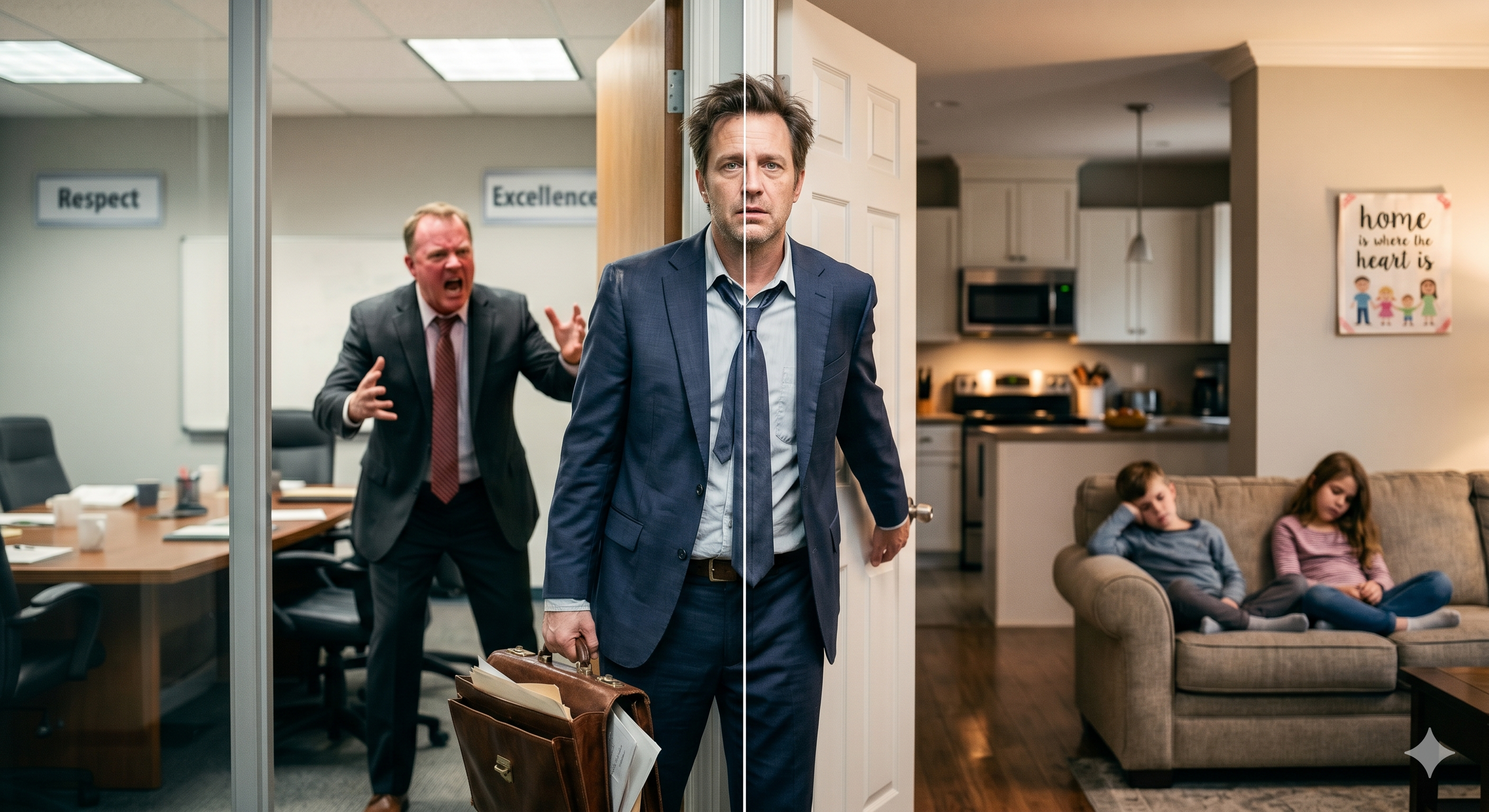
- You can lose them mentally and emotionally. Consistent poor leadership can trigger a biological threat state. It drains their Energy, shatters their Focus, erodes their Commitment, and diminishes their Effort. I refer to these areas as the Four Pillars of Human Functioning. People can become the "working wounded" - physically present, but mentally and emotionally burnt.
- You lose them physically. In high-consequence environments like medicine, aviation, or mining, the continuum doesn't stop at quiet quitting or a resignation letter. Extreme cognitive and emotional fatigue causes blind spots. Protocols get missed, critical errors occur, accidents happen, and people die.
Yes, it's sad. And unfortunately, it's true.
Often, we "lose them" and in some cases we literally lose them.
The Keys to Optimal Human Functioning: The Three Great States
This dynamic mirrors developmental psychology. When caregivers cultivate an environment where children feel Safe (free from threat and judgment), Significant (knowing they truly matter), and Situated (clear on expectations and where they stand), those children naturally learn, adapt, and flourish.
When those conditions are missing in childhood, clinicians diagnose a heartbreaking condition called "failure to thrive." This is not an abstract theory or a casual metaphor; failure to thrive is an actual clinical diagnosis. It identifies what happens biologically and psychologically when humans are deprived of the essential requirements needed to grow.
Adults in the workplace are no different. As I outline in Getting to Better, the Three Great States aren't corporate perks - they are the literal Keys to Optimal Human Functioning that fuel the non-negotiable human requirements needed for surviving and thriving.
When a leader fails to provide an environment where people feel Safe, Significant, and Situated, it triggers individual and collective failure to thrive. No amount of talent, superficial wellness perks, or compliance checklists can overcome an environment missing the essential conditions required for life.
Getting to Better
So, how has the business world screwed this up for decades?
Because leadership development has historically been treated like a corporate charm school, flooded with abstract academic theories, complicated models, and very little measurable return on investment. When budgets get tight, leadership training is the first line to be cut because executives know deep down that generic seminars haven't changed daily behavior on the floor.
We don't need more complex theory. We need simplexity - simple, actionable practices that operationalize what humans truly need to function optimally.
That's the very reason why I wrote Getting to Better: to offer a comprehensive, step-by-step architecture for human betterment that anyone (executives, frontline managers, teachers, and parents) can put into practice immediately. And it is why we built Brivia: a company determined to make things better at work and in life with simple, practical tools that have a verified track record for elevating human potential and optimizing performance.
Every single day, leaders can provide the foundational conditions where their people can learn, adapt, grow, and become stronger. When we create the Three Great States in the places and spaces we spend the most time, everyone gets Better – at work, in life – everywhere.
When we lead them, like this, we won't lose them.
Quality leadership saves lives. Full stop.
Stephen de Groot is President and CoFounder at Brivia. He is the author of the highly acclaimed book Getting to Better: A New Model for Elevating Human Potential at Work and in Life and Responsive Leadership (SAGE, 2016).
To learn more about Getting to Better and to order your copy now, Click Here.




















 November 2, 2023